
What Is Diarrhea and Why Is Nutrition So Important
Diarrhea is a symptom, not a standalone disease. It is most commonly caused by viral infections, less often by bacteria, food poisoning, or medications. The main problem in diarrhea is not the loose stools themselves, but the risk of dehydration and loss of electrolytes.
Nutrition during this period plays a key role. A proper diet supports the recovery of the intestinal lining, reduces irritation, and limits fluid loss. Inappropriate foods can prolong symptoms and worsen the condition.
What to Eat During Diarrhea to Support Recovery
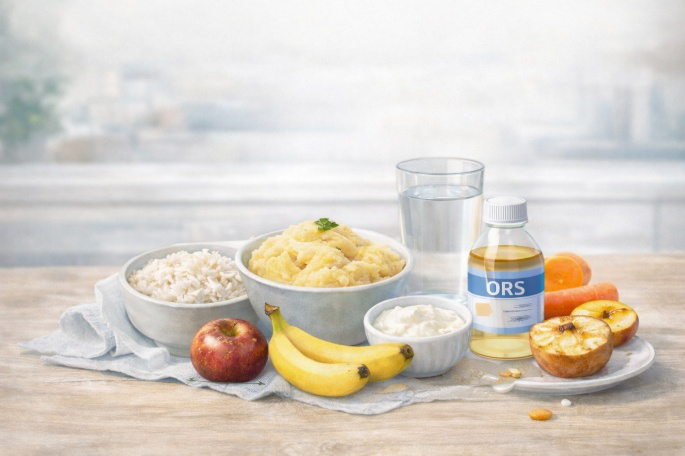
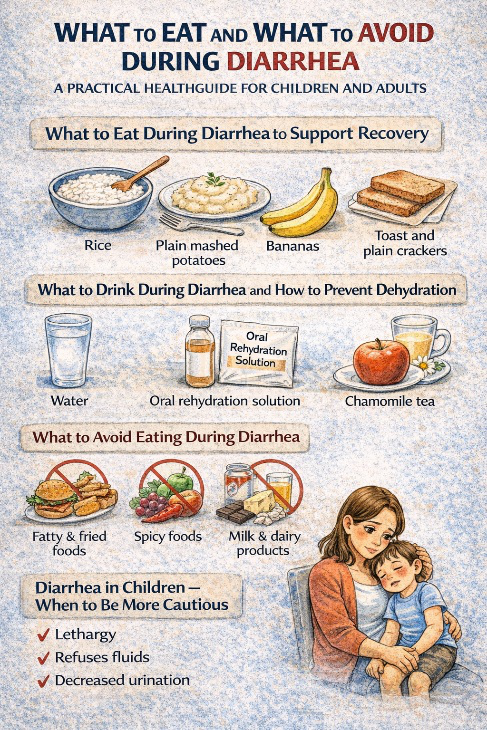
During diarrhea, food should be light, easy to digest, and gentle on the intestines. Suitable foods are low in fat and fiber, as they do not excessively stimulate intestinal motility. Rice is a classic example because it has a binding effect and helps form stools. Potatoes, especially boiled or mashed without butter, are also a good choice, as they provide carbohydrates and potassium.
Bananas are particularly beneficial because they contain pectin, which helps thicken stools, as well as potassium, which is lost during diarrhea. Baked apple is also suitable, as thermally processed fruit is easier to digest than raw fruit.
Toasted bread or rusks are often well tolerated because they are low in fat and do not irritate the stomach.
What to Drink During Diarrhea and How to Avoid Dehydration
The most important aspect during diarrhea is fluid intake. Plain water is necessary, but it is not sufficient on its own because it does not replace lost electrolytes. Oral rehydration solutions are the most appropriate choice, as they contain balanced amounts of electrolytes and glucose.

Herbal teas such as chamomile may have a mild soothing effect on the intestines. Carbonated drinks, juices, and sweetened beverages are not suitable, as their high sugar content can worsen diarrhea through an osmotic mechanism.
In infants, breastfeeding should continue, as breast milk supports immune protection and recovery.
What Not to Eat During Diarrhea to Avoid Prolonging Symptoms
Fatty and fried foods should be avoided because they are difficult to digest and burden the digestive system. Spicy seasonings and strongly flavored dishes can also irritate the intestinal lining.
Raw fruits and vegetables high in fiber often increase intestinal motility and may worsen diarrhea. Whole-grain products, nuts, and seeds are not appropriate in the acute phase.
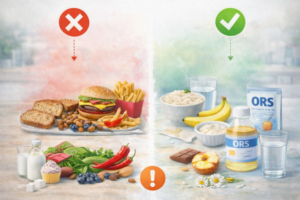
Milk and some dairy products may sometimes be harder to tolerate, as temporary lactose intolerance can develop during diarrhea. Sugary foods and sweet drinks should also be limited.
How Long Should We Follow a Gentle Diet
Viral diarrhea usually lasts several days. Once bowel movements begin to normalize, the diet can gradually be expanded. Returning to a normal eating pattern should be done gradually, without suddenly introducing fatty and heavy meals.
In cases of prolonged diarrhea, high fever, blood in the stool, or signs of dehydration such as dry mouth, reduced urination, and fatigue, medical consultation is necessary.

Diarrhea in Children – When to Be More Cautious
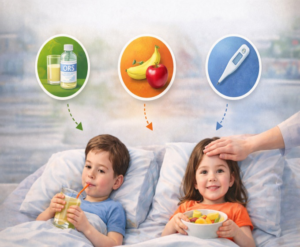
In young children, the risk of dehydration is higher, as they lose fluids more quickly. Therefore, careful monitoring is especially important. If the child is lethargic, refuses fluids, or has decreased urination, these are warning signs and should be immediately evaluated by a doctor to avoid complications.
Conclusion: Nutrition as Part of the Treatment
Diarrhea is usually a self-limiting condition, but the proper dietary approach significantly supports recovery. Light, gentle foods and adequate fluid intake are the foundation of treatment. Avoiding irritating products prevents prolongation of symptoms and reduces the risk of complications.
The balance between proper nutrition, hydration, and timely medical consultation in case of concerning symptoms is the best approach for both children and adults.

Important Notice
The information in this article is intended for educational and informational purposes only. It does not replace a medical examination, diagnosis, or individual consultation with a physician.
In the presence of persistent symptoms, signs of dehydration, high fever, blood in the stool, or worsening of the general condition, prompt medical evaluation is necessary.
Every individual responds differently, especially in childhood. If you have any concerns or doubts, always consult a qualified healthcare professional.
About the Author
Dr. Angel Todev, MD, is a specialist in Infectious Diseases with clinical experience in the diagnosis and management of pediatric and adult infectious conditions. He practices at the Department of Infectious Diseases at St. George University Hospital, Plovdiv, Bulgaria.