
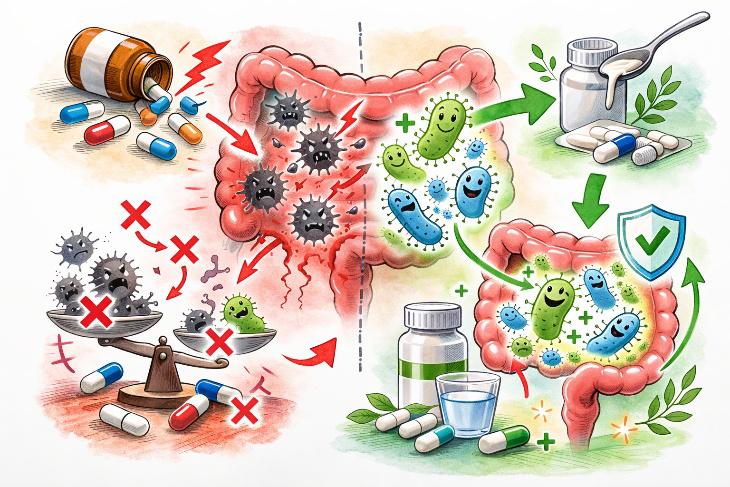
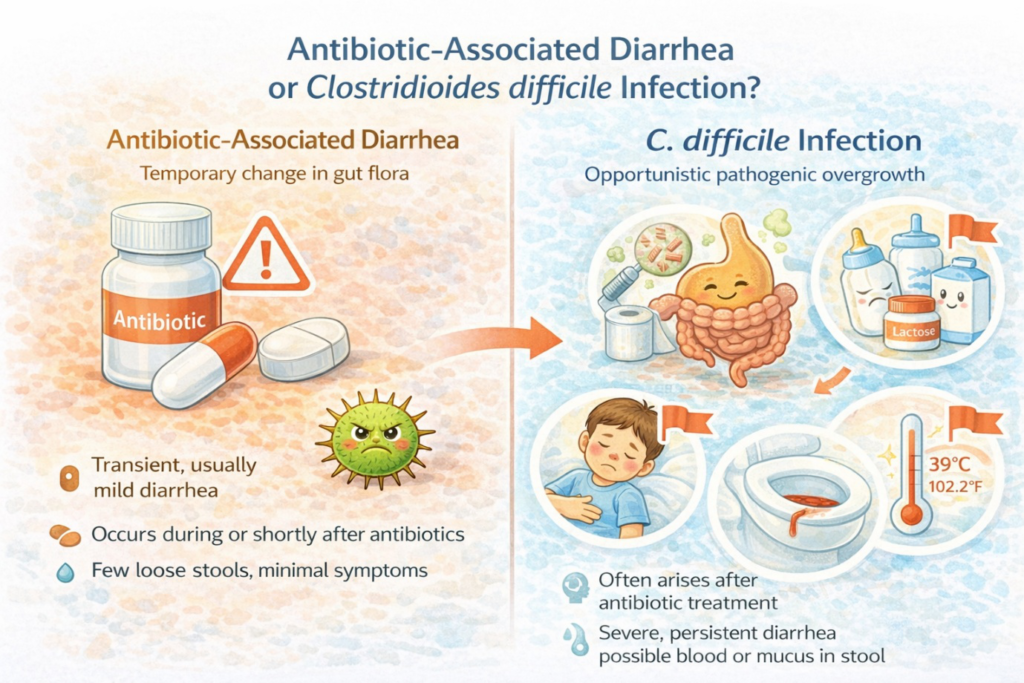
Diarrhea following antibiotic treatment is relatively common in childhood. In most cases, it is mild and transient, related to temporary alterations in the intestinal microbiota. However, in some instances, diarrhea may indicate a more serious complication, including infection with Clostridioides difficile (C. difficile). Distinguishing between simple antibiotic-associated diarrhea caused by dysbiosis and true C. difficile infection is essential, as management and treatment strategies differ significantly.
What Is Antibiotic-Associated Diarrhea?
Antibiotics do not act exclusively on the pathogen for which they are prescribed; they also disrupt the normal intestinal microbiota. This disruption may lead to microbial imbalance, reduction of beneficial bacteria, and alteration of intestinal homeostasis. As a result, children may experience loose stools, bloating, abdominal discomfort, and diarrhea.

This type of diarrhea usually begins during the antibiotic course or within a few days after its completion and often resolves spontaneously. The mere occurrence of diarrhea after antibiotic use does not automatically indicate C. difficile infection.
When Is Diarrhea Clinically Significant?
Clinically significant diarrhea generally refers to three or more watery stools within 24 hours, particularly when accompanied by systemic symptoms such as fever, fatigue, or abdominal pain. Occasional softer stools without deterioration of general condition rarely require further investigation.
Concerning signs include persistent or worsening diarrhea, high fever, severe abdominal pain, blood or significant mucus in the stool, and signs of dehydration. It is particularly alarming if diarrhea develops or worsens several days after completing the antibiotic course rather than improving.
It is important to remember that viral gastroenteritis is common among daycare and school-aged children and may coincide with antibiotic therapy. Therefore, not every episode of diarrhea after antibiotics is directly caused by the medication or associated with C. difficile.
What Is Clostridioides difficile?
C. difficile is a bacterium that may colonize the intestines, especially in young children, without causing disease. Problems arise when antibiotics suppress the normal gut microbiota, allowing the organism to proliferate and produce toxins.
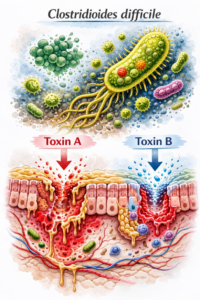
Toxins A and B damage the intestinal mucosa and cause inflammation. Clinical presentation ranges from mild watery diarrhea to more severe colitis characterized by abdominal pain, fever, and systemic illness.
Special Considerations in Children Under 3 Years of Age
In children under 2–3 years of age, clinically significant C. difficile infection is relatively rare despite frequent asymptomatic colonization. This is thought to be due to immature or reduced expression of toxin receptors in the intestinal epithelium, limiting toxin-mediated inflammatory injury.
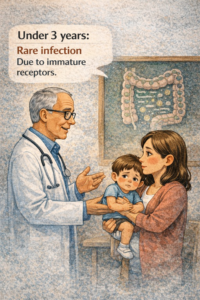
Because of this, a positive laboratory test in a young child does not necessarily indicate true infection. Results must always be interpreted within the clinical context.
When Should We Test for C. difficile?
Testing is appropriate in cases of clinically significant diarrhea, particularly when there has been recent antibiotic exposure and pronounced symptoms.
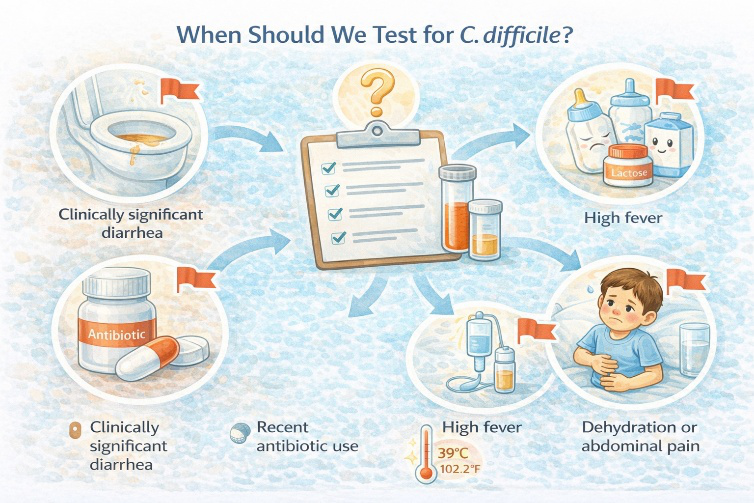
Routine testing is not recommended for mild diarrhea without systemic manifestations. The diagnosis is primarily clinical, and laboratory testing serves as supportive evidence. A positive result without compatible symptoms does not automatically warrant treatment.
Is There a Role for Probiotics During Antibiotic Therapy?
Probiotics administered during antibiotic treatment may reduce the risk of antibiotic-associated diarrhea. Certain strains, including Lactobacillus rhamnosus GG and Saccharomyces boulardii, have evidence supporting their use in pediatric practice.
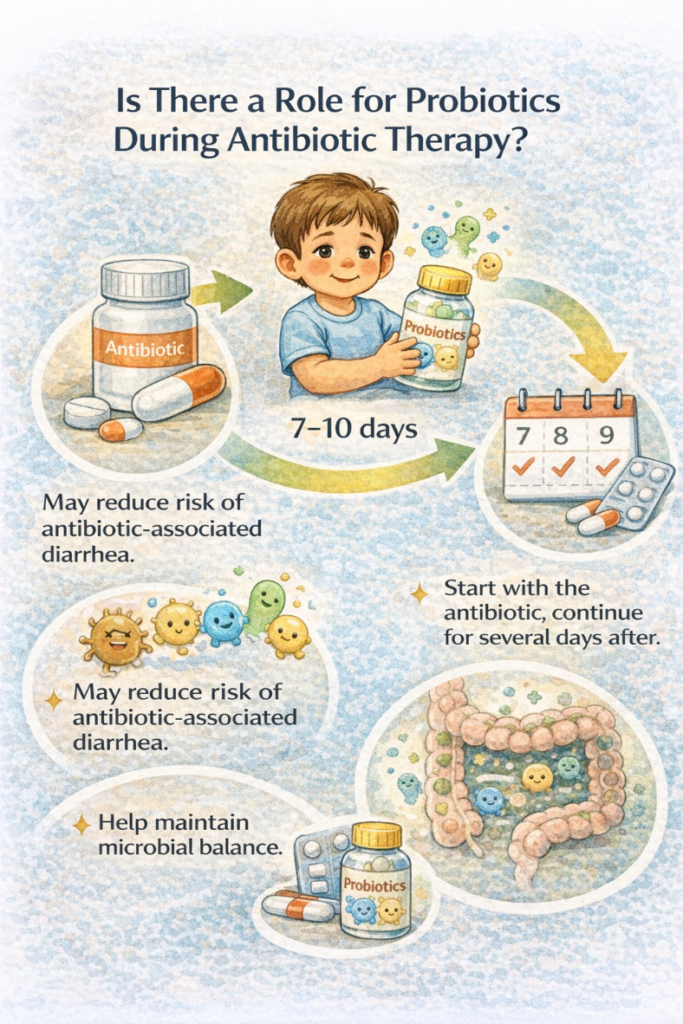
Probiotics do not completely eliminate the risk of diarrhea or C. difficile infection, but they may help preserve microbial balance. They are generally recommended to start simultaneously with the antibiotic and continue for several days after completion, with product selection tailored to the child’s age and condition.
How Is C. difficile Infection Treated?
The first step is assessing whether the triggering antibiotic can be discontinued. In mild cases, this alone may lead to improvement.
Adequate rehydration and dietary management are essential. When necessary, specific antimicrobial therapy should be initiated according to severity and current clinical guidelines.
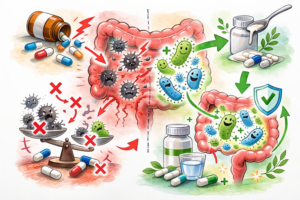
Importantly, treatment decisions should be based on clinical presentation rather than laboratory findings alone.
C. difficile infection carries a risk of recurrence, particularly in children with repeated antibiotic exposure or underlying conditions. Recurrence of diarrhea within several weeks after treatment requires renewed medical evaluation.
When Is It аn Emergency?
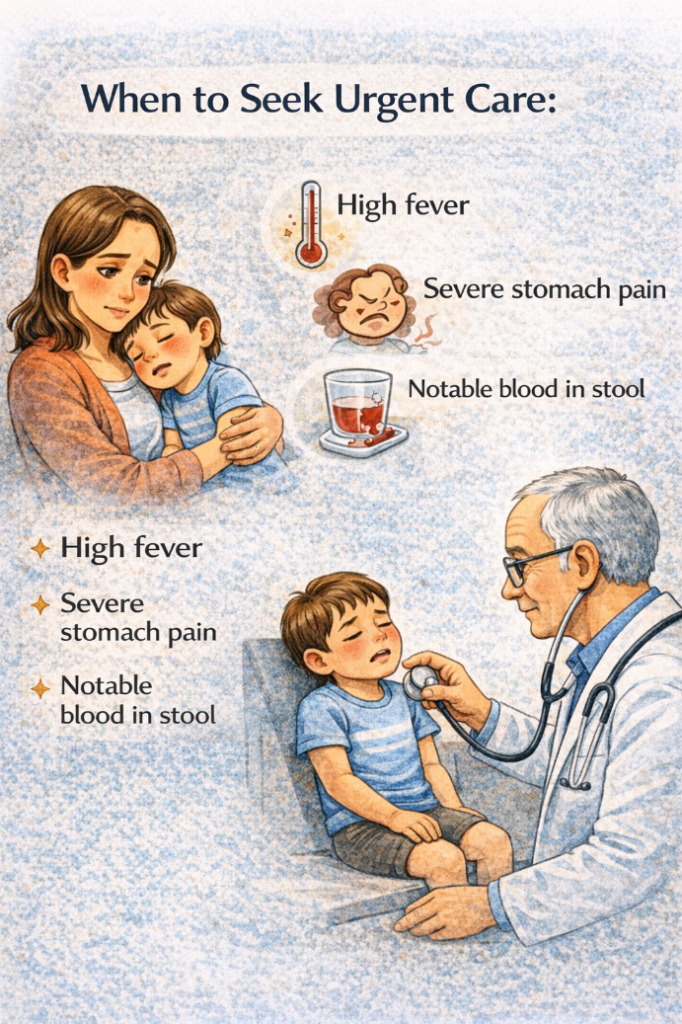
Urgent medical evaluation is required if there are signs of dehydration, marked lethargy, high fever, severe abdominal pain, or blood in the stool. In such cases, hospitalization and intravenous rehydration may be necessary.
Conclusion
In most cases, diarrhea after antibiotic use in children is mild and self-limiting. However, persistent, severe, or worsening symptoms should raise suspicion for possible Clostridioides difficile infection. Careful clinical assessment, evaluation of overall condition, and rational antibiotic use remain key principles in management.
Important Notice
The information in this article is intended for educational and informational purposes only. It does not replace a medical examination, diagnosis, or individual consultation with a physician.
In the presence of persistent symptoms, signs of dehydration, high fever, blood in the stool, or worsening of the general condition, prompt medical evaluation is necessary.
Every individual responds differently, especially in childhood. If you have any concerns or doubts, always consult a qualified healthcare professional.
Dr. Angel Todev
Infectious Diseases Specialist